


Article
Art by Shane Rebenschied

Day of Doom

How a disaster ended the age of the dinosaurs—and changed life on our planet forever  

By Alessandra Potenza
From the March/April 2026 Issue

Learning Objective: Students will identify cause and effect in a nonfiction article.

Lexiles: Easier Level, 600L-700L

Standards

Download and Print
Think and Read

As you read, think about how scientists used rocks to help them understand why the dinosaurs disappeared.

The worst day in the history of planet Earth began like any other.

It was 66 million years ago in North America. The sun rose in the sky. Flies buzzed in the air. A warm mist hung over the forests.

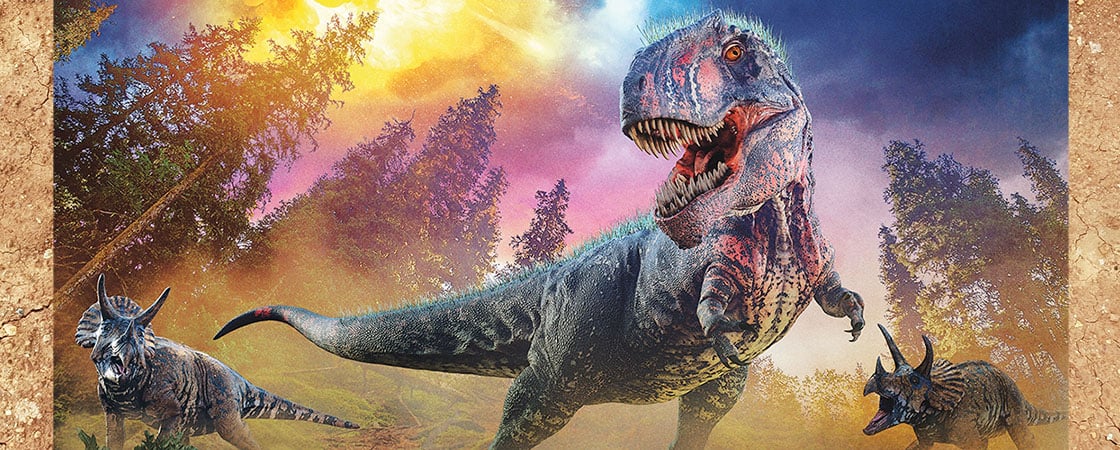
Stomping through the jungle was a huge monster covered in dark scales and thin fuzz. This was the scariest of all dinosaurs: Tyrannosaurus rex (T. rex). It growled and showed its 60 sharp teeth. Each was as long as a banana.

Suddenly, the ground began to shake. Burning rocks fell from the sky. The air turned so hot that trees burst into flames.

To the T. rex, it must have felt like the world was ending. And in some ways, it was. The T. rex—along with most other dinosaurs—would soon be extinct.

It was the worst day in the history of planet Earth. It began like any other.

It was 66 million years ago in North America. The sun rose in the sky. Flies buzzed in the air. There was a warm mist in the forests.

A huge monster was stomping through the jungle. It was covered in dark scales and thin fuzz. This was the scariest of all dinosaurs. It was the Tyrannosaurus rex (T. rex). It growled and showed its 60 sharp teeth. Each was as long as a banana.

Then the ground began to shake. Burning rocks fell from the sky. The air turned very hot. Trees burst into flames.

To the T. rex, it must have felt like the world was ending. And in some ways, it was. The T. rex and most other dinosaurs would soon be extinct.


The Age of the Dinosaurs

The Age of the Dinosaurs

Maciej Frolow/Getty Images

A New Idea

Walter Alvarez wondered: Had an asteroid hit Earth millions of years ago, killing the dinosaurs?

Before this disaster, dinosaurs had roamed Earth for millions of years. Scientists call that time the age of the dinosaurs. At first, dinosaurs were not big and scary like the ones we see in movies. They started small—about the size of large dogs!

Over time, dinosaurs got larger and spread all over the world. There were huge titanosaurs (tye-TAN-uh-sors) that stretched their long necks to eat from the tallest trees. There were horned Triceratops (trye-SEHR-uh-tahps) that shook the ground as they stomped by. And of course, there was the largest meat-eating animal ever to walk the land: T. rex. It was about the size and weight of a school bus!

T. rex and other dinosaurs ruled the land. And then they vanished.

Dinosaurs had roamed Earth for millions of years before this disaster. Scientists call that time the age of the dinosaurs. At first, dinosaurs were not big and scary like the ones we see in movies. They started small. They were about the size of large dogs!

Dinosaurs got larger over time. They spread all over the world. There were huge titanosaurs (tye-TAN-uh-sors).They stretched their long necks to eat from the tallest trees. There were horned Triceratops (trye-SEHR-uh-tahps). They shook the ground as they stomped by. And of course, there was the T. rex. It was the largest meat-eating animal ever to walk the land. It was about the size and weight of a school bus!

T. rex and other dinosaurs ruled the land. And then they vanished.


A Mystery

A Mystery

Fossil Illustration by JOHN CARROZZA

History

Alvarez studied layers of rock and clay. He was looking for clues about how the dinosaurs died.

Fast-forward to the mid-1900s. During this time, experts didn’t know what happened to the dinosaurs. But scientists were finding some clues by studying rocks.

The layers of rock under our feet are like a thick history book. They tell the story of our planet. Rocks are older as you get deeper underground. Each layer is like a different chapter in Earth’s past. Some hold fossils of animals and plants from long ago.

In the 1970s, an American scientist named Walter Alvarez was studying rocks from millions of years ago. Like other scientists before him, Alvarez saw layers of rock filled with fossils from the time of the dinosaurs. Above it, he saw empty rock layers with almost no fossils. That was from after the dinosaurs were gone. In between these layers was a thin layer of soft clay.

If rocks were like a history book, the layer of clay seemed to Alvarez like an important page. But he had no idea how to read it. So he called his father, Luis, for help.

Luis Alvarez was also a scientist. He was known for thinking creatively. He suggested testing the clay to learn more about it. What the two men found was a big surprise.

The clay was full of a metal called iridium (ih-RIH-dee-uhm). The metal is very rare on Earth. But a lot of it is found somewhere else—in outer space.

Walter Alvarez thought hard about what this could mean. Only one idea made sense: If there’s a lot of iridium in space, maybe that’s where the metal had come from!

Maybe a giant space rock called an asteroid had slammed into Earth. It would have scattered iridium all over the planet. Maybe a space rock led to the disappearance of the dinosaurs!

Fast-forward to the mid-1900s. During this time, experts didn’t know what happened to the dinosaurs. But scientists were finding some clues by studying rocks.

There are layers of rock in the ground. They are like a thick history book. They tell the story of our planet. Rocks are older as you get deeper underground. Each layer is like a different chapter in Earth’s past. Some layers have fossils of animals and plants from long ago.

In the 1970s, an American scientist was studying rocks from millions of years ago. His name was Walter Alvarez. Like other scientists before him, Alvarez saw layers of rock. They were filled with fossils from the time of the dinosaurs. Above it, he saw empty rock layers with almost no fossils. That was from after the dinosaurs were gone. In between these layers was a thin layer of soft clay.

This layer of clay seemed to Alvarez like an important page in Earth’s history book. But he had no idea how to read it. So he called his father, Luis, for help.

Luis Alvarez was also a scientist. He was known for thinking creatively. He suggested testing the clay to learn more about it. What the two men found was a big surprise.

The clay was full of a metal called iridium (ih-RIH-dee-uhm). This metal is very rare on Earth. But a lot of it is found somewhere else: in outer space.

Walter Alvarez thought hard about what this could mean. Only one idea made sense. If there’s a lot of iridium in space, maybe that’s where the metal had come from!

Maybe a giant space rock called an asteroid had hit Earth. It would have scattered iridium all over the planet. Maybe a space rock led to the disappearance of the dinosaurs!


A Big Idea

A Big Idea

Pictorial Press Ltd/Alamy Stock Photo (Walter & Luis Alvarez); Southwest Times, January 1982/Courtesy of the Library of Virginia, Richmond, Virginia (Headline); Shutterstock.com (Paper)

Dino Detectives  

Scientists Walter Alvarez (right) and his father, Luis, stand in front of layers of rock and clay in 1981. These rocks led them to solve the mystery of why dinosaurs died out. Their research was covered in major newspapers.

In 1980, Alvarez published this idea and research for other scientists to read. It caused a storm of confusion and disbelief. At first, most scientists didn’t accept this theory.

For decades, experts had thought that all changes on Earth happen gradually. They thought that animals and plants appear and die out over millions of years. And while most do, Alvarez realized something: The dinosaurs might have been different.

By the late 1980s, scientists started finding iridium in rocks all over the world. These rocks were also from the time the dinosaurs died out. Slowly, more people started to agree with Alvarez’s idea.

Then in 1991, the biggest clue of all was found: a huge crater. It was deep under the sea near Mexico. It was from 66 million years ago. Only one thing could have made a hole that big in the ground—a giant asteroid!

In 1980, Alvarez published this idea and research. He wanted other scientists to read it. At first, people were confused. Most scientists didn’t accept this theory.

For many years, experts had thought that all changes on Earth happen slowly. They thought that animals and plants appear and die out over millions of years. And most do. But Alvarez realized something. The dinosaurs might have been different.

By the late 1980s, scientists started finding iridium in rocks all over the world. These rocks were also from the time the dinosaurs had died out. Slowly, more people started to agree with Alvarez’s idea.

The biggest clue of all was found in 1991. It was a huge crater. It was deep under the sea near Mexico. It was from 66 million years ago. Only one thing could have made a hole that big. It must have been a giant asteroid!


How a Fossil Forms

How a Fossil Forms

Shutterstock.com

Step 1:

A dinosaur or other animal dies.

Step 1:

A dinosaur or other animal dies.


Shutterstock.com

Step 2:

Over time, its skeleton gets buried under water, rocks, and mud, and hardens into a fossil.

Step 2:

Over time, its skeleton gets buried under water, rocks, and mud, and hardens into a fossil.


Shutterstock.com

Step 3:

After more time passes, the water dries up. Some of the dirt wears away. People can now find the fossil!

Step 3:

After more time passes, the water dries up. Some of the dirt wears away. People can now find the fossil!


A Cold, Dark World

A Cold, Dark World

Alvarez and other scientists studied the enormous crater. It helped them figure out how big the asteroid was—bigger than the tallest mountain on Earth! Finally, scientists understood what had happened.

About 66 million years ago, an asteroid crashed into Earth. It instantly killed and destroyed everything within 600 miles. But the destruction didn’t end there.

Within minutes, the crash caused powerful earthquakes. Enormous waves hit the coasts. Wildfires began burning and didn’t stop.

In fact, the disaster was only just beginning. Ash from the fires and dust from the asteroid’s impact covered the planet like a blanket. They blocked out the sunlight.

For years, Earth was a cold, dark world. Plants couldn’t grow. Without plants, plant-eating animals died. Without those plant eaters, meat eaters died next.

Scientists think that most species on Earth died out. The age of the dinosaurs was over.

Alvarez and other scientists studied the huge crater. It helped them figure out how big the asteroid was. It was bigger than the tallest mountain on Earth! Finally, scientists understood what had happened.

An asteroid crashed into Earth about 66 million years ago. It instantly killed and destroyed everything within 600 miles. But the damage didn’t end there.

The crash caused powerful earthquakes within minutes. Enormous waves hit the coasts. Wildfires began burning and didn’t stop.

The disaster was only just beginning. When the asteroid hit, ash from the fires and dust from the impact covered the planet like a blanket. They blocked out the sunlight.

For years, Earth was a cold, dark world. Plants couldn’t grow. Animals that ate plants died. Without those plant eaters, meat eaters died next.

Scientists think that most species on Earth died out. The age of the dinosaurs was over.


Survivors

Survivors

Shutterstock.com

But over thousands of years, the planet healed. The darkness lifted, and the sun came out. Plants began to grow again.

There were no T. rexes in this new world. But some animals had survived: crocodiles, snakes, turtles, and small mammals. They had hidden underground, in caves, and in ponds. Now they roamed the earth. New types of mammals began to appear: rats, sloths, bears, monkeys, and later, humans!

The planet healed over thousands of years. The darkness lifted. The sun came out. Plants began to grow again.

There were no T. rexes in this new world. But some animals had survived, like crocodiles, snakes, turtles, and small mammals. They had hidden underground, in caves, and in ponds. Now they walked on Earth. New types of mammals began to appear. These included rats, sloths, bears, monkeys, and later, humans!


Shutterstock.com

Would we be here today if that asteroid had never hit Earth? Probably not. Or maybe we would be. We would just have to share our world with a T. rex walking around in our backyard!

Would we be here today if that asteroid had never hit Earth? Probably not. Or maybe we would be. We would just have to share our world with a T. rex walking around in our backyard!


THINK AND WRITE 

What happened to the dinosaurs? How did Walter Alvarez help figure this out? Answer in a paragraph using details from the story.

THINK AND WRITE 

What happened to the dinosaurs? How did Walter Alvarez help figure this out? Answer in a paragraph using details from the story.


video (1)
Slideshows (1)
Audio ()
Activities (6)
Quizzes (1)
Answer Key (1)
video (1)
Slideshows (1)
Audio ()
Activities (6) Download All Quizzes and Activities
Quizzes (1)
Answer Key (1)
Text-to-Speech