

Article
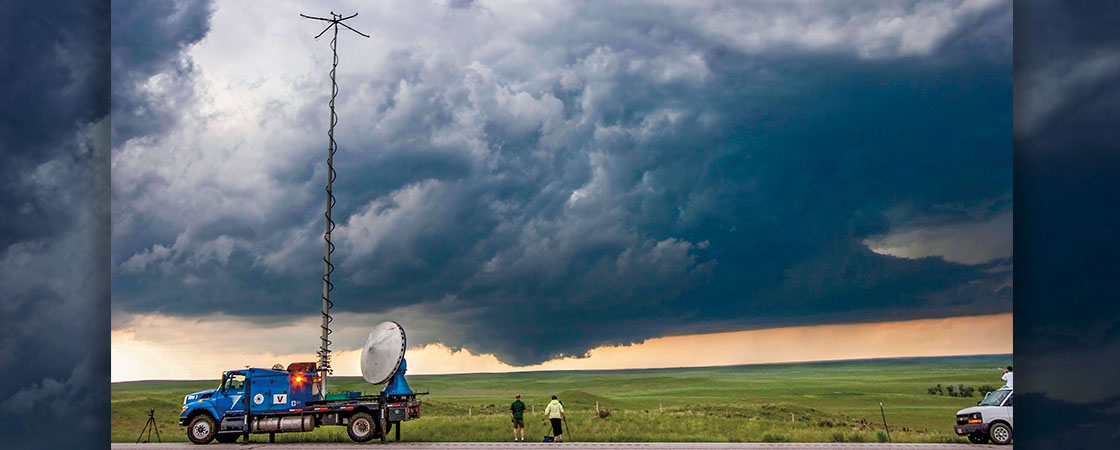
Ryan McGinnis/Alamy Stock Photo

Chasing a Tornado

Find out what it’s like to follow these giant spinning storms.

By Alex Winnick
From the February 2026 Issue

Standards

It’s a warm day. The air is humid, or sticky. Dark-gray clouds roll through the sky. Miles away, a dangerous storm is forming. This isn’t just any storm. It can rip through buildings and suck towns up into the air. Hail the size of golf balls can fall to the ground. It’s a tornado!

Instead of running to safety, you’re heading toward this natural disaster. Why? You’re a storm chaser! You gather information about dangerous weather so people can stay safe. The best way to do that is by studying the storm up close.

As you drive closer, the storm begins to appear. Are you ready to chase it?

Tracking Tornadoes

“Storm chaser” isn’t your official job title. You’re a meteorologist, a scientist who studies and predicts the weather. Some meteorologists work in offices, using advanced technology to track storms. Others, like you, work outside in the places where the storms hit.

Tornadoes can be unpredictable. It’s not always clear what they will do. Some form in minutes, seemingly out of nowhere. Others change direction with little warning. It’s hard for computers to guess where tornadoes will form or move. In fact, there’s only one way to confirm that a tornado is actually forming: A person needs to see it.

That’s where you come in. If you see a storm forming, you track what happens—and how it changes.

Jumping Into Action

Benjamin C. Tankersley/For The Washington Post via Getty Images

It’s time to get to work. Computer data suggested the location where this giant storm is forming. So you and your partner are driving in that direction. This job is safer when done in pairs. You drive while your partner looks for signs of danger.

As you get closer, you pull over and launch a weather balloon into the sky. This floating tool takes the temperature of the air.

Uh-oh. The balloon finds that there’s cold air above you and warm air around you. It’s the perfect recipe for a thunderstorm!

As if on cue, lightning flashes in the sky. Crack! Thunder claps, and rain begins to fall. But this storm hasn’t formed a tornado . . . yet.

Then the wind around you picks up. High above, more wind blows in from a different direction. The winds cause the thunderstorm to spin.

You hold your breath. Then you see it: A dark spiral stretches down and touches the ground. It begins to spin across the ground.

The tornado has landed!

Shutterstock.com

What Makes a Tornado?

A Dangerous Job

You race back to the van and jump inside. From a safe distance, you and your partner take pictures and record videos of the storm. You can study these later to learn more about tornadoes.

Now it’s time to move! The tornado has spun west and is speeding across fields of grass. As you follow the storm, your partner starts spreading the word about where the storm is headed.

She calls local TV and radio stations so reporters can give an update. She also shares the news on social media. If people are in the path of the tornado, they can get out of harm’s way.

That’s why your job is so important. You help people make key decisions about how to stay safe. The updates you share about the storm can save dozens of lives.

It’s a dangerous job, but you have the tools and training to do it safely. When the next tornado hits, you’ll be ready to chase it.

Ryan McGinnis/Alamy Stock Photo

THINK AND WRITE

Imagine you’re a storm chaser. Using descriptive details, write a journal entry about chasing a tornado.

video (1)
Audio ()
Activities (3)
Answer Key (1)
video (1)
Audio ()
Activities (3) Download All Quizzes and Activities
Answer Key (1)
Text-to-Speech