
Fables teach important morals, or life lessons. In the fable “The Ants and the Grasshopper,” the ants spend the summer storing food while the grasshopper rests and plays. When winter comes, the grasshopper goes hungry. What’s the moral of the fable? Working hard and planning for the future are very important!
Back to Teacher View
Student View
Katherin Fehrl
What Is a Fable?
You are going to read a fable by a famous storyteller. Here’s what to know first.
By Laine Falk | Art By Kathrin Fehrl
From the December 2026 ⁄ January 2027 Issue
Learning Objective: Students will read a short informational text to build knowledge about a topic.
Featured Skill:
Key Ideas and Details,
Standards

1. Fables are stories that teach a lesson.
2. Do you like animal characters? Read a fable!
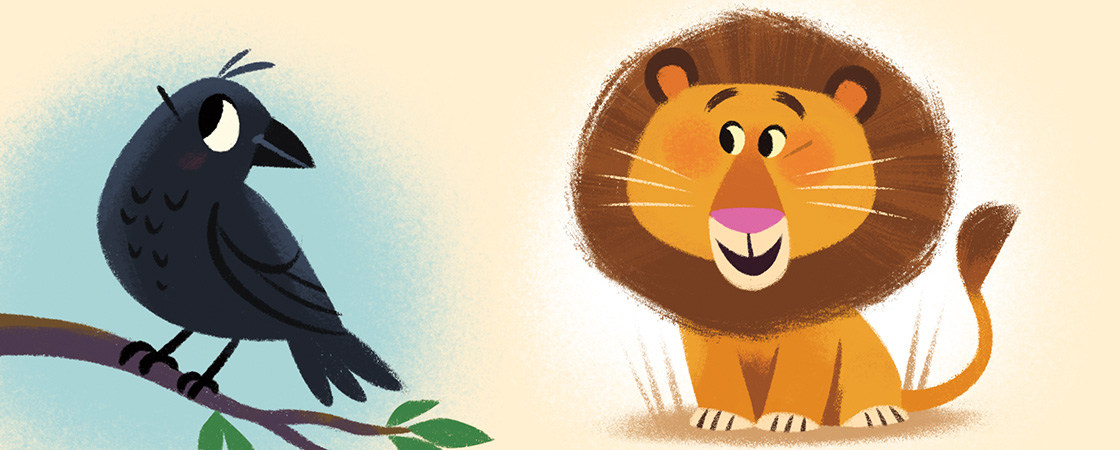
The main characters in fables are usually animals. These animals act like humans. They can think, talk, and do things that animals can’t do in real life. Crows, lions, and crocodiles are the stars of some famous fables.
3. One storyteller shared many fables.
Aesop (EE-sahp) was a storyteller in ancient Greece. He lived more than 2,000 years ago. People think he told at least 600 different fables! He didn’t have a book of stories with his name on it. We know his stories because people told them over and over again. The stories became famous and spread around the world. People are still telling Aesop’s stories today!
4. Fables give us famous expressions.
Do you know the expression “Don’t cry wolf”? It comes from a fable called “The Boy Who Cried Wolf.” In the story, a boy lies over and over about a wolf attacking his sheep. When a wolf actually appears, no one believes him. Now people say someone “cried wolf” when that person repeats something that isn’t true. The play you’re about to read also gives us a famous expression. Turn the page to find out what it is!
Audio
()
Audio
()

Text-to-Speech